Why I Still Prefer PHP in a JavaScript-Obsessed World

Everyone says PHP is dead. They've been saying it for a decade. Here is why they are entirely wrong.
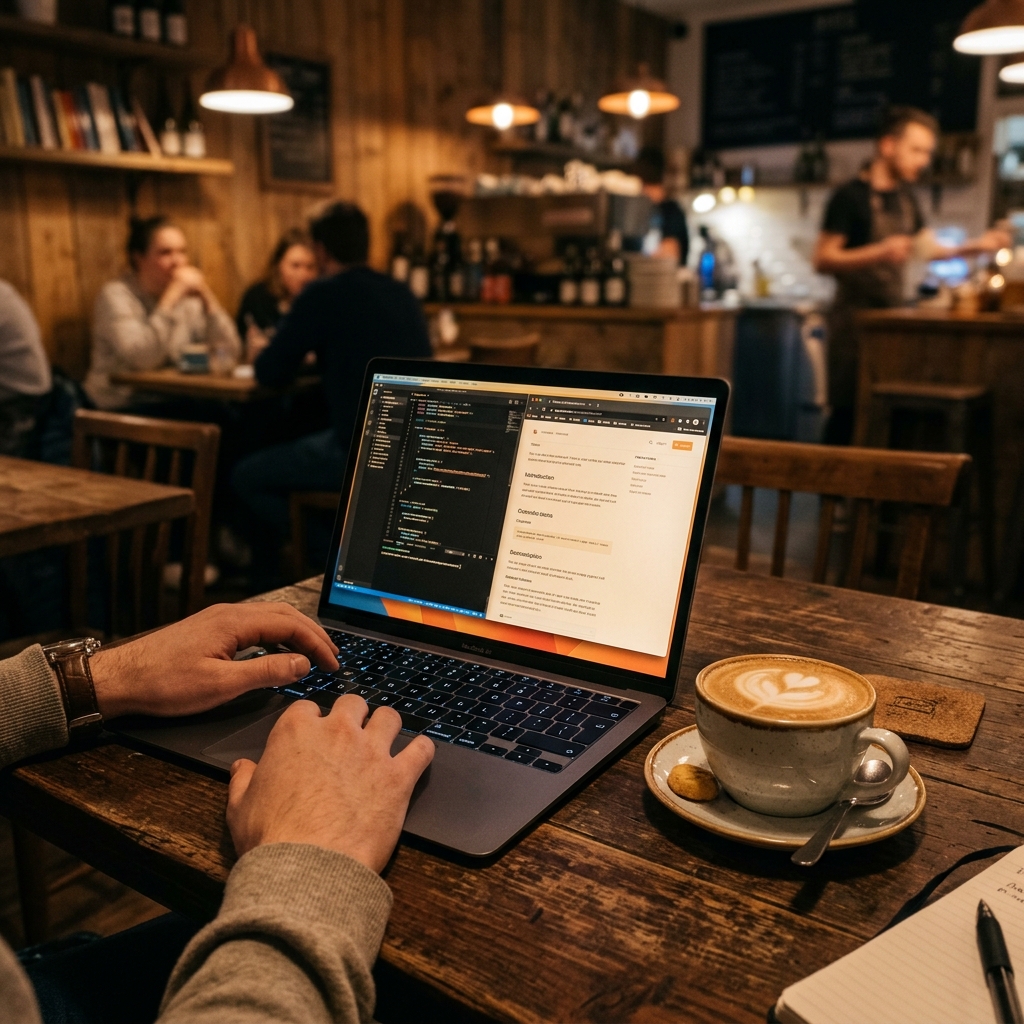
If you spend five minutes on Twitter, you'll see someone dunking on PHP. It's practically a sport at this point.
"PHP is dead." "Just rewrite everything in Node." "Why would anyone learn PHP in 2026?" The takes are always loud, always confident, and almost always coming from someone who hasn't written a line of PHP since version 5.3.
Honestly? It makes me laugh.
I'm a PHP engineer. I've shipped industrial portals, custom APIs, e-commerce platforms, and I've lost count of how many WordPress plugins I've built. I work with React and Next.js on the frontend regularly, I'm not some dinosaur refusing to learn new things. But when it comes to server-side work, I keep reaching for PHP. And I don't see that changing anytime soon.
PHP 8.x Is Not the PHP You Remember
Most of the hate comes from people who remember PHP 5 on cheap shared hosting. Slow execution, no type safety, bizarre function naming conventions, mysql_* functions everywhere. Yeah, that era was rough. I'll give them that.
But PHP 8.4 is a completely different language.
The JIT (Just-In-Time) compiler landed in 8.0 and has gotten better with every release. OPcache is mature and battle-tested. Fibers brought lightweight concurrency. Enums, named arguments, readonly properties, match expressions, union types, intersection types. The language has been on an absolute tear of quality-of-life improvements.
And the performance? It's fast. Really fast. With OPcache and the JIT enabled, PHP handles heavy traffic loads without breaking a sweat. If your application is slow in 2026, I can almost guarantee the bottleneck is your database queries or your architecture, not the language itself.
The "Dying" Language Still Runs Most of the Internet
Numbers don't lie. PHP powers roughly 75% of all websites where the server-side language is known. That's not a typo. Seventy-five percent.
WordPress alone runs about 43% of the entire web. Then you've got Laravel, Symfony, Magento, Drupal, and thousands of custom applications built on PHP frameworks. The demand for good PHP developers is massive, and it's not going away just because a new JavaScript framework dropped this month.
Startups love chasing the newest shiny thing. That's fine, that's their culture. But the businesses that actually make money, the ones running e-commerce stores processing real transactions, the agencies managing 200 client sites, the SaaS platforms serving enterprise customers, they're running on boring, stable, battle-tested PHP. And they're not rewriting anything.
The "Share Nothing" Architecture
This might be PHP's single biggest advantage, and weirdly, nobody ever talks about it.
When a PHP request comes in, the runtime boots up, does its job, sends the response, and dies. Everything gets cleaned up. Memory freed. State wiped. The next request starts completely fresh.
In Node.js, your server is a long-running process. It boots once and handles every incoming request in the same process. Sounds efficient, right? It is, until you accidentally leak memory. A closure that holds a reference it shouldn't. A global variable that grows with every request. An event listener that never gets cleaned up. That leaked memory stays leaked for the entire lifetime of the process. Request one's memory leak is still there at request one million. Eventually your server runs out of memory and crashes.
PHP makes this entire category of bugs impossible by design. You literally cannot leak memory across requests because each request gets its own clean runtime. I've seen Node.js services require careful profiling and periodic restarts to deal with slow memory leaks. I've never had to do that with PHP.
Is it less efficient in terms of raw startup cost per request? Sure, technically. But modern PHP with OPcache preloading eliminates most of that overhead, and the peace of mind of not worrying about memory leaks across requests is worth it.
The Ecosystem Is Genuinely World-Class
Composer is arguably the best dependency manager in any language ecosystem. It just works. Dependency resolution is fast, the lock file is reliable, and Packagist (the default repository) has everything you'd need.
Laravel is arguably the most productive web framework ever built for server-side applications. Eloquent ORM, Blade templating, queues, events, broadcasting, task scheduling. It's an all-in-one toolkit that lets you ship features incredibly fast without sacrificing code quality.
And the WordPress ecosystem itself is enormous. Over 60,000 free plugins. Thousands of themes. A REST API that lets you integrate with anything. An active developer community that's been building and sharing for two decades.
I use JavaScript for the browser. I think React is great for building UIs. But for processing business logic, handling payments, managing user data, and talking to a database? Give me PHP. Every single time.
The language that was supposed to die a decade ago keeps getting faster, keeps getting more features, and keeps powering the majority of the web. Maybe the Twitter hot takes have it wrong.
Working on a WordPress project?
Let's talk about what you're building.
I'm available for custom plugin development, performance optimization, and headless WordPress projects.